Outsider-Art / Style prompt
Prison Ballpoint Handkerchief Pano
Bic-ballpoint on white cotton handkerchief in the Chicano-prison paño vernacular.
Customize this prompt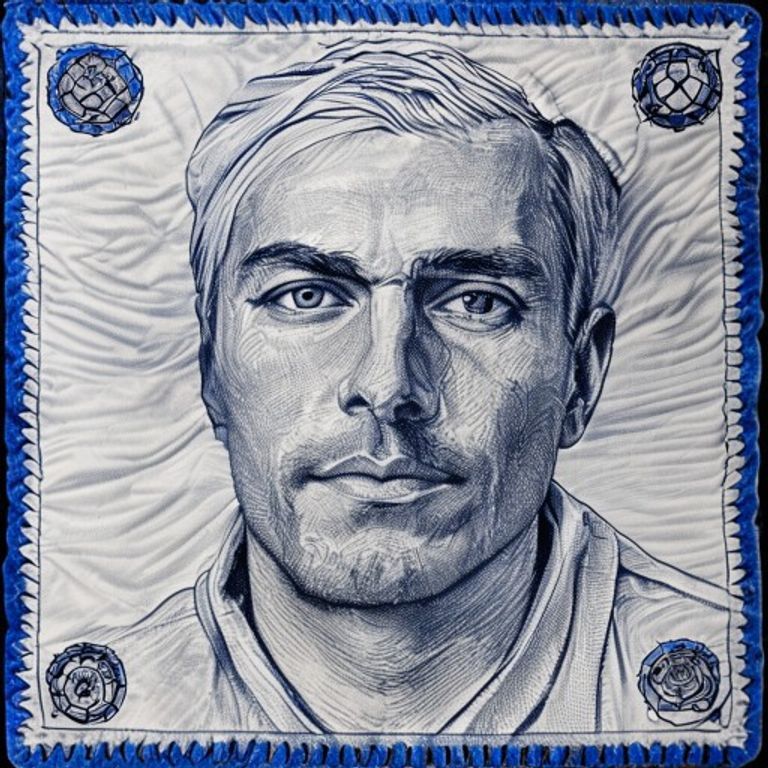
The prompt
Render in the medium and register of the Chicano-prison paño tradition: blue Bic ballpoint pen drawing on a folded white cotton handkerchief substrate, the cotton weave visible through the ink, ink color limited to standard blue ballpoint (occasionally with a second black-ballpoint pass for shadow), rendering technique built entirely of fine cross-hatching and stippling with no other modeling method available, virtuosic crosshatch density producing photographic-grade tonal range from pure white cotton to near-black saturated hatch, palette therefore restricted to blue-on-white with optional black accents, decorative ornamental border in the same hatching style framing the central image (scrollwork, classical column motifs, banner-shape decorative frames with no legible text inside), small secondary motifs in the corners (rose, dice, clock with no hands, vague Catholic iconography), the visual register of a man with nothing to do for years except a single Bic pen and a commissary handkerchief, intended originally to be folded and mailed to family, the dignity and patience of constraint-driven craft, slight cotton-wrinkle texture and folding-crease marks visible. Do not render legible on-canvas text, logos, watermarks, named hate-symbols, or any real person depicted defamatorily. Preserve the subject, pose, and composition of the source image exactly, change only the medium and rendering.
What it is doing
Paño emerged in mid-twentieth-century American prisons because incarcerated men had a Bic pen, a handkerchief, and time. The constraint produced rendering virtuosity that art-school students with full studios cannot reproduce. The lesson is not that prison is good. The lesson is that infinite-resource conditions produce indecision and indecision produces mush. One pen, one cloth, one captive audience to mail it to. That is the entire condition for serious work. The studio-rich student has too many escape routes.
Ways to change it
Pick any of these in the gallery and the choice is added to the prompt you copy.
- hatch-density: sparse-line vs medium-cross vs photographic-tonal-build
- ink-color: pure-blue vs blue-plus-black vs all-black-ballpoint
- border-elaboration: simple-rectangle vs scrolled-cartouche vs full-classical-frame
- cotton-weave-visibility: subtle vs medium vs strong-fabric-texture
- fold-crease: none vs one-center-crease vs quartered-folding-grid
- secondary-motifs: none vs corner-rose vs full-iconographic-corners
Style lineage
Learn the visual culture this draws from: The Paris Review.
Related prompts
See all 8 prompts in the Outsider-Art grammar