Numismatic-Coin-Medal / Style prompt
Worn Pocket Piece Patina Macro (Provenance as Surface)
The worn-down coin magnified to show every oxidation mark, surface scratch, and corrosion pattern. The wear-marks are the object's biography. The patina is evidence. Circulation is archaeology.
Customize this prompt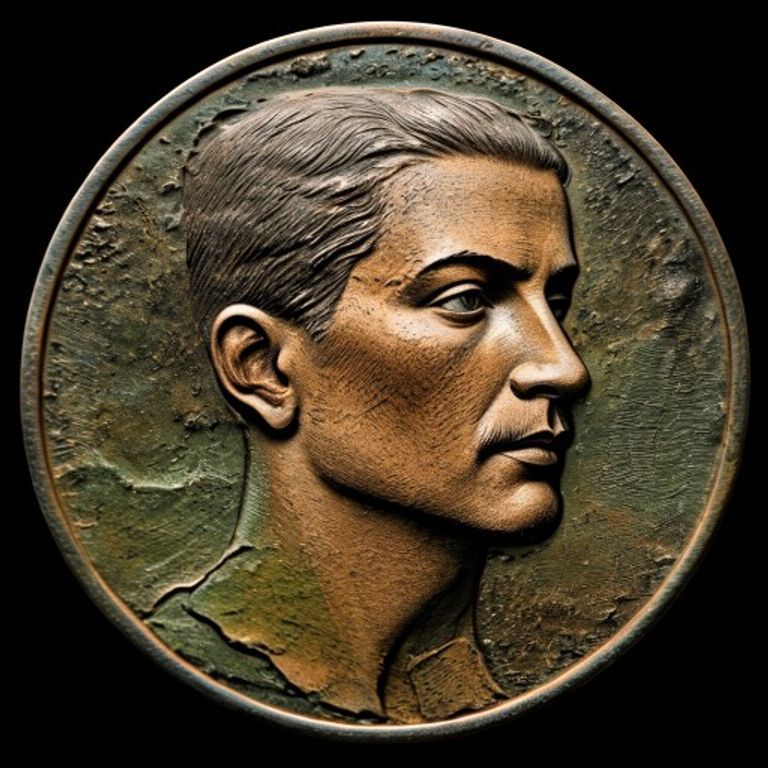
The prompt
Re-render this image as a worn 19th-century pocket coin, magnified at macro scale (as if viewed through 8x to 15x magnification, filling the frame), approximately 25 to 35mm natural diameter. The surface is heavily worn from decades of circulation in pockets and hands. Obverse: a profile portrait rendered as a series of flat and rounded bumps from wear, the original sharp relief completely gone, the nose worn smooth, the hair rendered as faint corrugations, the eye completely worn away leaving only a smooth depression. The portrait is barely recognizable. The legend band around the original rim: mostly worn illegible, the incised letters appearing as shallow grooves with mineralized patina filling them. The field of the coin: a map of oxidation patterns, darker green-black verdigris in protected recesses, lighter honey-brown oxidation on the high points where polishing and handling have worn away the protective patina. Reverse: similarly worn, the original design barely discernible, original details flattened to gentle undulations. The entire surface: covered in fine scratches and micro-abrasions running in all directions, evidence of thousands of transactions. Spots of crusty dark oxidation (cuprite, malachite) filling tiny pits. Light areas where thumb or fingers have polished the high points to a slightly brighter bronze. The rim: worn and irregular, the original edge definition gone. The surface texture: no smooth areas, every visible pixel shows some form of corrosion, wear, or oxidation pattern. The overall impression: age made visible, hands made visible, circulation history made visible. Aspect ratio to show significant macro detail of the obverse or reverse surface. Preserve the subject, pose, and composition of the source image exactly, change only the medium and rendering.
What it is doing
A worn coin is an archive. The wear patterns record the object's circulation history. The nose worn flat on a portrait means that coin was spent a thousand times, that particular location was handled most often. The oxidation patterns record the climate and soil where the coin lay forgotten. The thumb-polish mark on the high points records someone holding it and looking at it, trying to read the worn inscription. A worn coin is archaeology compressed into one small object. This is why collectors value the worn coins more than the mint-condition coins for certain purposes. The worn coin proves it lived. The mint coin proves it was locked away. The patina is not defacement, it is documentation. Every groove filled with verdigris is a record of what chemistry has done to the metal. The macro view removes the object from its context and makes the surface itself the subject. At macro scale, the wear becomes landscape. The corrosion becomes geology. The coin becomes a map of its own history.
Ways to change it
Pick any of these in the gallery and the choice is added to the prompt you copy.
- Wear-severity dial: moderately worn, features still somewhat visible vs heavily worn, original details almost completely gone vs severely worn, flattest possible surface
- Oxidation-pattern dial: light honey-brown on high points, dark verdigris in recesses vs uniform dark patina throughout vs heavy crusty oxidation with mineral deposits
- Corrosion-density dial: sparse fine scratches and micro-pits vs dense scratch network, heavy pitting vs crusty mineral encrustation covering 40 to 60 percent of surface
- Thumb-polish dial: obvious polished spot where most-handled area shows lighter bronze vs subtle wear patterns suggesting careful handling vs random wear with no particular focal spot
- Optical-scale dial: 10x magnification, individual corrosion patterns clear vs 20x magnification, texture becomes landscape vs extreme macro, pixel-sized oxidation visible
- Object-narrative dial: generic circulation wear, no story vs evidence of field recovery (soil oxidation patterns) vs evidence of careful owner inspection (focused thumb polish)
Style lineage
Learn the visual culture this draws from: Numiscurio.
Related prompts
See all 7 prompts in the Numismatic-Coin-Medal grammar