Movie-Poster / Style prompt
Universal Monsters 1930s
Classic Hollywood horror (1931 through 1939, Dracula, Frankenstein, Mummy, Invisible Man era). Lithograph and photomontage with dramatic shadow and expressionist lighting.
Customize this prompt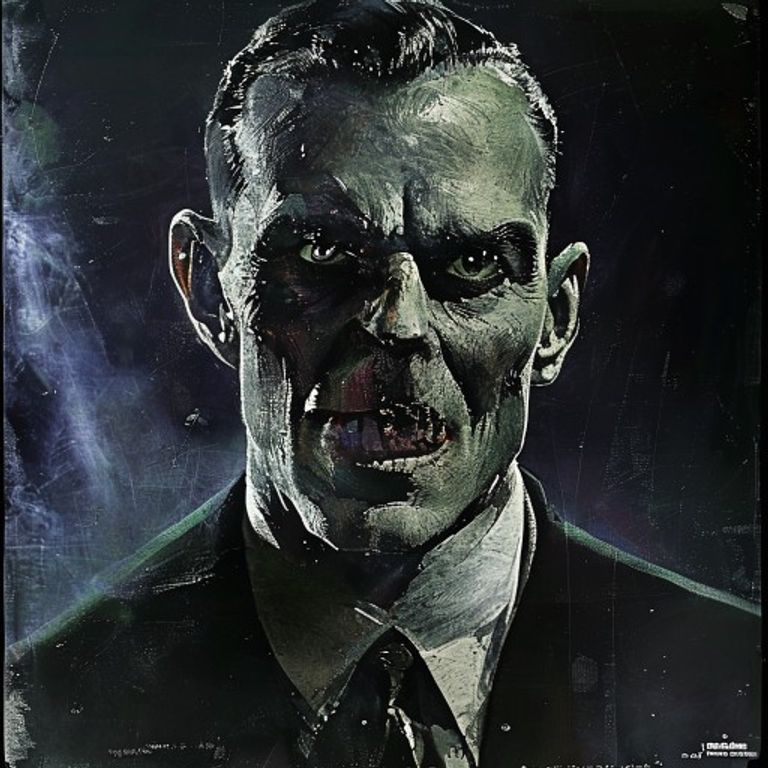
The prompt
Re-render this image in the visual register of Universal Monsters 1930s horror cinema lobby cards and posters (1931 through 1939, Dracula, Frankenstein, The Mummy, The Invisible Man, Werewolf era). Lithograph style with photomontage sensibility: the image combines photographic faces or figures of actors with painted or drawn environments, shadow work, and atmospheric effects. Faces rendered with photographic clarity and dramatic expression, the eyes hyperlit to convey supernatural intention. Palette dark and Gothic: deep purples, blacks, dark greens, sickly yellows, occasional blood red or corpse white, all building toward shadow rather than brightness. Lighting expressionist and theatrical: a single hard light source carving the face in high contrast, deep pools of shadow, rim light separating figure from background, the composition designed to generate maximum dread from minimal light. Shadow work and atmospheric effect: mist suggested with white paint or scraping, architectural elements (crypts, laboratories, ruined castles) partially painted and partially photomontaged, the background often a darker photographic field with painted or drawn details added. Texture: visible lithograph grain and printing texture, occasional visible brush strokes in the atmospheric areas, the image surface reading as a printed artifact rather than a photograph. Composition: the monster or threat usually occupies the dominant position, often larger than human scale or in a commanding pose, the human figure presented as victim or terrified witness. Mood: supernatural terror rendered as visual logic, the monster as the inevitable force in a world where light is too thin. Strictly no on-canvas legible text, no titles, no credits, no studio watermark, no visible text lettering. Preserve the subject, pose, and composition of the source image exactly, change only the medium and rendering.
What it is doing
Goebbels understood that fear strikes the viewer before meaning arrives. The Universal Monsters posters rendered the monster as visible form, which made fear tradeable and distributable. Expressionism lit the dark and made the dark shine. The monster's face is the commodity. The fear is the sales object. The poster teaches the body to recognize what to fear before the body knows why.
Ways to change it
Pick any of these in the gallery and the choice is added to the prompt you copy.
- Era dial: 1931 early gothic vs 1935 peak atmospheric vs 1939 late expressionist
- Monster emphasis: face hyperlit center vs body in commanding pose vs threat partial or suggested
- Lighting register: high contrast carve light vs multiple shadow zones vs almost silhouette darkness
- Photomontage dial: mostly photographic faces vs faces with painted shadow overlay vs heavily drawn and painted with photo accent
- Atmospheric effect: minimal mist vs substantial fog and shadow vs environment almost equals monster
Style lineage
Learn the visual culture this draws from: the source.
Related prompts
See all 34 prompts in the Movie-Poster grammar