Movie-Poster / Style prompt
Kurosawa Brushstroke Jidaigeki Poster
Rendering register: a 1954 to 1985 Kurosawa film poster in the sumi-e brushwork tradition, executed with sparse ink calligraphy on raw paper, vast negative space, and a single decisive accent of vermilion.
Customize this prompt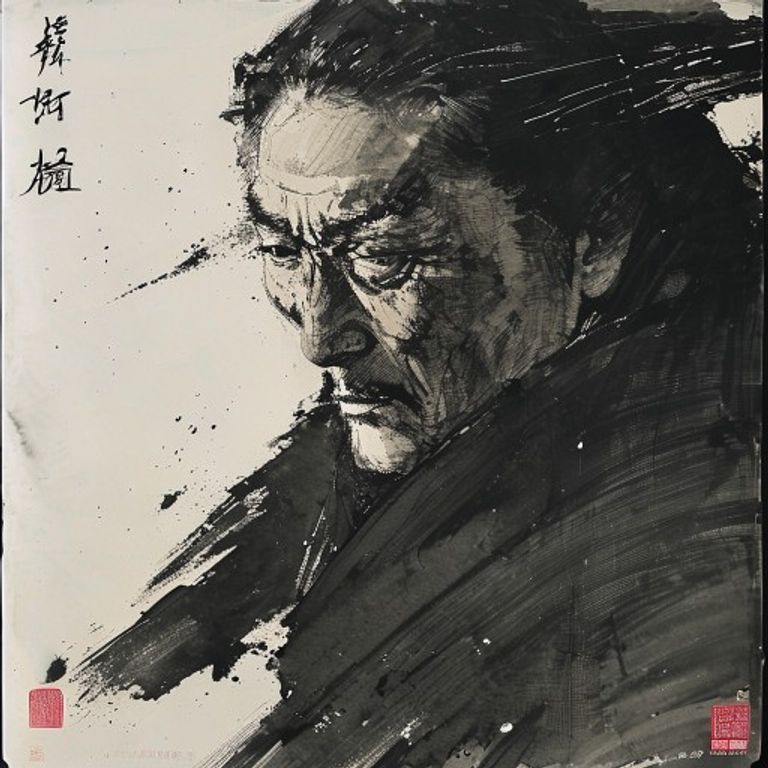
The prompt
Render this image as a 1954 to 1985 Akira Kurosawa jidaigeki film poster in the visual register of sumi-e ink brushwork, executed with sparse decisive ink strokes on raw rice paper. Restrict the palette to ink black, paper ivory, gray wash, and one sparing accent of vermilion red or sealed cinnabar. Compose with vast deliberate negative space, the subject occupying only a fraction of the canvas, balanced against open paper that carries equal compositional weight. Render the subject in calligraphic brushwork with dry brush drag at the edges, ink bleed at the stroke ends, occasional splatter from a heavily loaded brush, and visible paper fiber where the ink soaked through. The atmosphere is contemplative, blade sharp, monastic in restraint, presenting the subject as a moment of stillness inside a much larger silence. Strictly no on-canvas text, no title lettering, no legible type, no studio marks, no watermark. Preserve the subject, pose, and composition of the source image exactly, change only the medium and rendering. Aspect ratio matches source.
What it is doing
The sumi-e poster sells restraint as a luxury good. Western audiences read the negative space as wisdom, not as the marketing decision it actually is. Kurosawa understood this perfectly, which is why his international campaigns used brushwork while his domestic campaigns often used photography. The vermilion accent is the price tag, the single permitted indulgence that signals the rest of the restraint was a choice rather than a constraint. Any contemporary image rendered in this register inherits the same upmarket austerity.
Ways to change it
Pick any of these in the gallery and the choice is added to the prompt you copy.
- Negative space: vast deliberate empty paper carrying equal compositional weight vs a balanced composition vs a subject-dominant frame
- Brush register: sparse decisive calligraphic strokes with dry-brush drag vs a loaded wet ink bleed vs a splattered gestural pull
- Accent: a single vermilion sealed-cinnabar mark vs no color, pure ink vs grey-wash gradation only
- Paper: raw rice-paper fiber showing through the ink vs smooth ivory vs aged tea-stained stock
- Stillness: calm even strokes, soft gray wash, wide untouched paper around the subject (signature) vs taut clipped strokes, heavy black edges, one hard horizontal ink line nearby vs sweeping slash strokes, flying ink splatter, dry-brush speed trails around the subject
Style lineage
Learn the visual culture this draws from: Posteritati Movie Poster Gallery.
Related prompts
See all 34 prompts in the Movie-Poster grammar