Meme / Style prompt
Midwit Bell Curve, Three-Panel Register
The midwit bell-curve format: three subjects horizontally arranged under an implied bell-curve, the visual grammar of how anxious midpoint consensus is bracketed by agreement on both tails.
Customize this prompt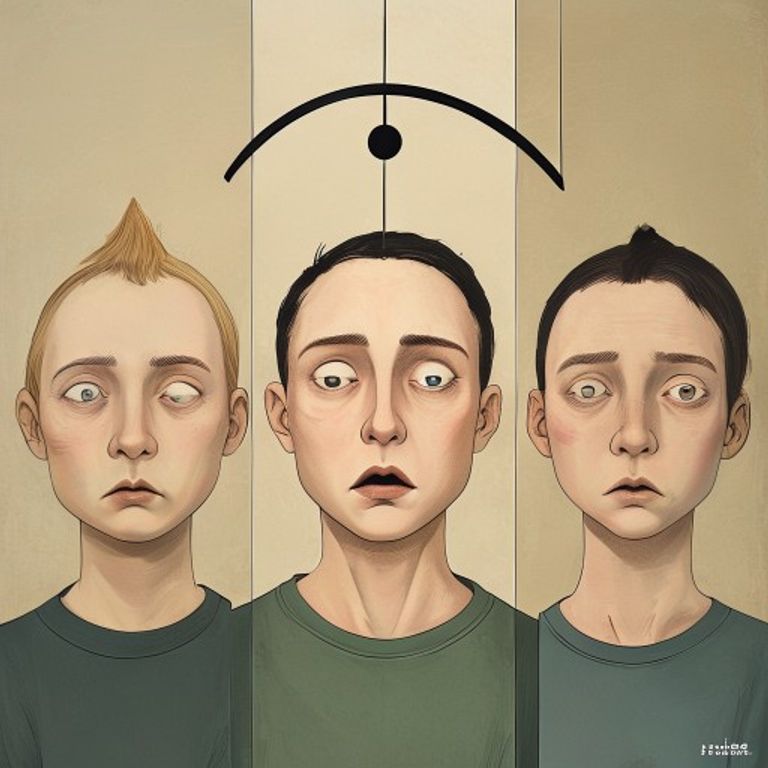
The prompt
Render in the midwit bell-curve meme register, the three-panel horizontal layout. If the source image has three subjects, render each at one position; if the source has one or two subjects, render the source-subject(s) in the center position and leave the left and right positions as small implied empty-cream rectangles rather than inventing faces. Above the three positions, a thin black hand-drawn arc suggests the top of a bell-curve, rising in the center, falling at both edges, no labels, no axis-numbers, no tick-marks. LEFT-POSITION render in a serene flat cartoon register: pale cream skin, eyes closed in soft arcs suggesting calm wisdom, slight smile, no concern. CENTER-POSITION render in the soyjak-anxious register: pale skin, wide open eyes with small dot pupils, open oval mouth in distress, eyebrows raised in worry, the face of socially-anxious midpoint consensus. RIGHT-POSITION render in the same serene cartoon register as the left, mirrored: closed eyes in soft arcs, slight smile, no concern, the calm of having arrived at the same conclusion as the left from the opposite direction. Background flat washed cream behind all three positions. Subtle thin vertical dividers between positions, hand-drawn, optional. No words, no letters, no captions, no IQ-numbers, no axis-labels, no logos, no watermarks, no named hate-symbols, no real-person likeness. Preserve the central subject from the source and render in the center anxious-position; do not invent the flanking subjects, leave them as flat-rendered abstracted face-shapes if no source-figure is available.
What it is doing
The midwit bell-curve format encodes the single most underrated dynamic in current culture: anxious midpoint consensus is created by the social cost of agreeing with whoever the discourse has currently marked as low-status. The "smart" position and the "dumb" position frequently agree, and the entire middle-class educated discourse exists to construct elaborate reasons to disagree with both. The format works because the audience recognizes themselves in the anxious center.
Ways to change it
Pick any of these in the gallery and the choice is added to the prompt you copy.
- Bell-curve arc: bold thick black arc sweeping across the full width, clearly dominant vs thin hand-drawn black arc above the three faces (signature) vs no arc at all, just the three faces on cream
- Center-face anxiety: raised worried brows, slightly open mouth, faint sweat bead vs wide eyes with dot pupils, open oval mouth, brows raised high (signature) vs bulging eyes, gaping screaming mouth, heavy sweat drops, trembling outline strokes
- Flanking-serenity register: soft-smile vs near-meditative vs open-arms-relaxed
- Divider treatment: thin-black vs subtle-grey vs absent
- Background: flat washed cream behind all three positions (signature) vs cool blue on the left, warm red center, cool blue right vs stark pure white with a faint gray paper grain
- Side figure match: left and right figures drawn as exact mirror-image twins (signature) vs same serene face, but different hair and head tilt vs two clearly different calm figures, one hooded monk, one bald elder
Style lineage
Learn the visual culture this draws from: Know Your Meme.
Related prompts
See all 20 prompts in the Meme grammar