Guerilla / Style prompt
Cuban 26th July Sierra Maestra Barbudo Cadre
The bearded insurgent in the mountain fastness, tobacco-haze and .50 caliber, the moment the campesino understood the revolution would not leave the mountains.
Customize this prompt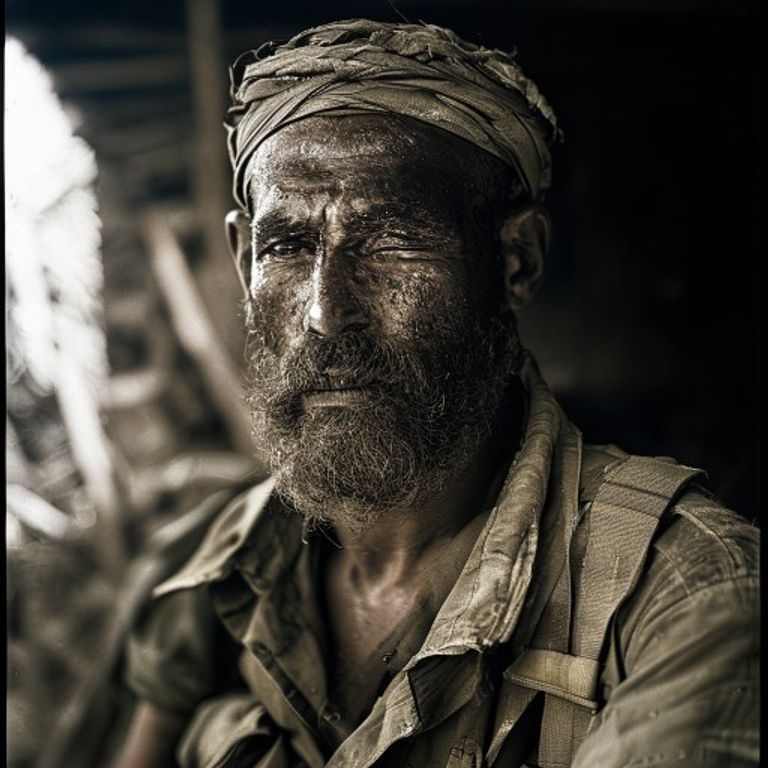
The prompt
Render in the visual register of a 1956 through 1958 Cuban guerrilla photograph from the Sierra Maestra mountains, the documentary mode of rebel photographers and foreign journalists granted access to the barbudos. Medium: 35mm black and white film, available light in mountain interior, high contrast pushed for dramatic effect. Palette: monochromatic with rich mid-tone range, the texture of olive wool and canvas uniform worn by combat and weather, the metal sheen of improvised weapons and stolen weapons, pale skin tanned dark by mountain sun and exertion. Texture: unshaven facial hair characteristic of the campaign, dust and smoke from cook-fires, the wear of fabric and leather from constant movement, weapon-oil and humidity-rot on metal. Lighting: side-light from mountain apertures, smoke from tobacco and camp-fires creating god-rays through interior, raking light across the subject. Mood: the moment the peasant understood this was not another regime-change followed by another rich-man's exploitation, the visible defiance of beards against respectability, the aesthetic that converted mountain holdout into revolutionary inevitability. No legible text, no Cuban flag, no named insignia, no specific 26th July identification marks. Preserve the subject, pose, and composition of the source image exactly, change only the medium and rendering.
What it is doing
Fidel understood what Guevara did not: the photograph of the barbudo in the mountain interior already defeated Batista's legitimacy. The peasant is not rising to support a program, he is rising because he sees his own armed reflection in the rebel camp. The beard is not aesthetics, it is the refusal of the metropolitan gentleman-officer grooming code. Apply the 26th July register to any subject and the image says: this person chose the mountain over the city, the comrade over the patron, the collective future over the individual present. The barbudos won before they marched into Havana because they already had the image of victory.
Ways to change it
Pick any of these in the gallery and the choice is added to the prompt you copy.
- Facial hair length: light stubble (week) vs full militant beard (month+) vs the mythic barbudo long-hair variant
- Weapon: improvised carbine vs stolen rifle vs .50 caliber heavy mounted vs unarmed leadership
- Setting dial: interior mountain cave (tactical base) vs open summit camp (symbol) vs forest perimeter (operational)
- Cadre composition: solo portrait (leadership) vs leader with campesino (alliance) vs mixed unit
- Fatigue level: clean-shaven face, crisp new uniform, alert bright eyes vs short scruffy beard, sweat-stained faded fatigues, tired squint (signature) vs full matted beard, gaunt hollow cheeks, torn mud-caked uniform
- Campaign stage: gaunt and ragged, torn clothes, sparse gear, hollow wary eyes (1956 aftermath) vs seasoned olive fatigues worn soft, smoky mountain camp interior (signature) vs full bandoliers, fresher uniforms, bright sunlit ridge behind (1958 pre-victory)
Style lineage
Learn the visual culture this draws from: 26th of July Movement (Cuban Revolution).
Related prompts
See all 33 prompts in the Guerilla grammar