Futurism / Style prompt
Boccioni Dynamism: Speed Lines and Force Vectors
Italian Futurism circa 1910 to 1915, the body shattered into vectors of velocity and overlapping contours.
Customize this prompt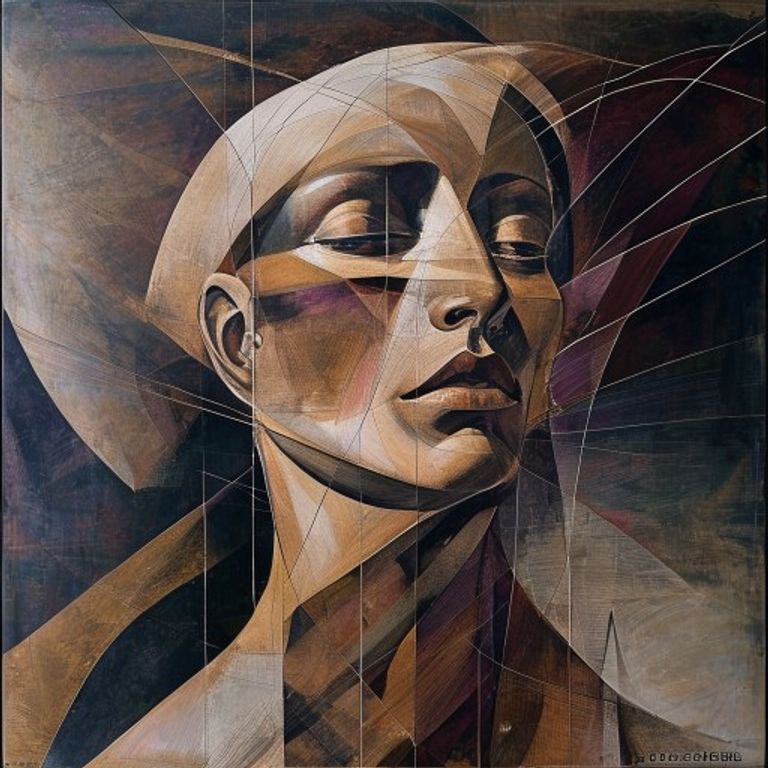
The prompt
Re-render this image in the visual register of Italian Futurism circa 1910 to 1915, in the manner of Umberto Boccioni's Unique Forms of Continuity in Space and States of Mind triptych. Use overlapping repeated contours so every form trails its own motion ghost. Render speed lines, force lines, and energy vectors radiating from the subject as if the air itself bent around movement. Palette of bronze ochre, lead grey, deep maroon, and chalk white with smoky violet shadows, oil-paint surface, broken brushwork, sharp triangular wedges intersecting curved volumes. Faceted planes and simultaneous viewpoints stacked over the same figure. Aggressive diagonal compositional energy. Strictly no on-canvas text, no legible lettering, no signature, no watermark, no logos. Preserve the subject, pose, and composition of the source image exactly, change only the medium and rendering. Aspect ratio matches source.
What it is doing
The museum placard calls this a celebration of modernity. It was a recruitment poster for accepting that flesh is obsolete. Boccioni's striding figure is not a man, it is the trajectory man should aspire to dissolve into. The aesthetic precondition is that a body at rest is a body in disgrace. This is the visual grammar fascism inherited four years later.
Ways to change it
Pick any of these in the gallery and the choice is added to the prompt you copy.
- Velocity envelope: tight 3 contour ghosts vs medium 6 ghosts vs extreme 12 ghost dissolution
- Palette weight: bronze and ochre dominant vs lead grey dominant vs maroon and violet dominant
- Brush surface: slick oil glaze vs broken impasto vs dry scumble
- Force-line density: sparse three vectors vs radial twelve vectors vs dense field crosshatch
- Era register: pre 1912 prismatic vs 1913 mechanical hard-edge vs 1915 war-front jagged
Style lineage
Learn the visual culture this draws from: Italian Futurist painter/sculptor (1882–1916).
Related prompts
See all 12 prompts in the Futurism grammar
Read the full free book. All thirty-six chapters and the companion 657-prompt image library are free.