Fine-Art / Style prompt
Van Eyck Northern Oil Invention (Style-Only, Image-Conditioned)
Style register: Jan van Eyck 1420s-1440s, the subject rendered with Flemish precision in oil glazes, every surface meticulously rendered, light transformed into visible material, the painting as a window into another world where every detail is precious.
Customize this prompt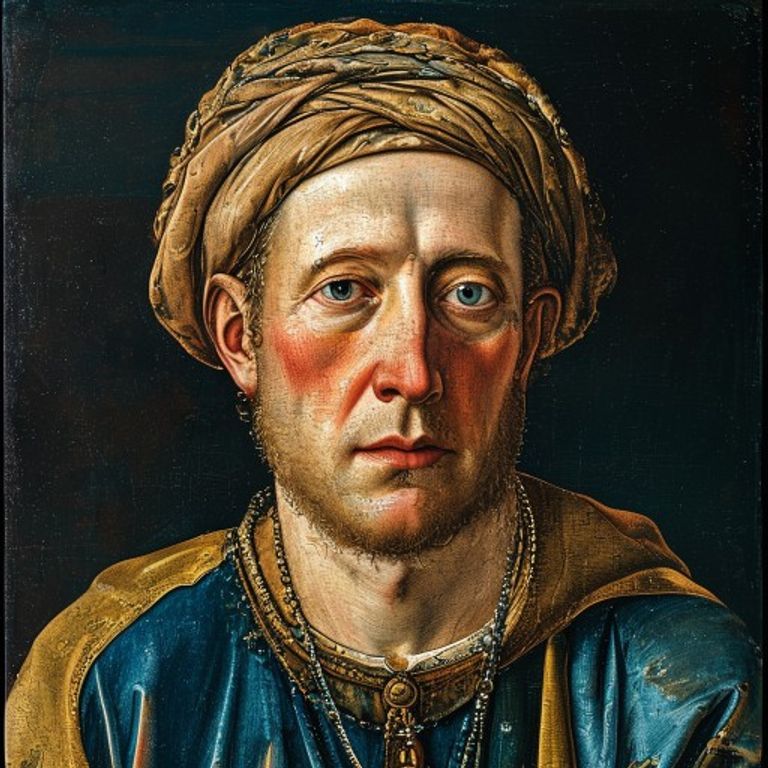
The prompt
Re-render this image as a Jan van Eyck Northern Renaissance oil painting from the 1430s to 1440s. The entire composition rendered with meticulous precision, every surface texture made visible and distinct: the nap of velvet, the translucence of linen, the wet gloss of an eye, the corroded patina of gold, the stubble on a chin. Light enters from a hidden source and is trapped in the paint itself, working through multiple transparent glazes of oil mixed with walnut or linseed, each glaze so thin light passes through to the layer below, creating luminosity from within. Color extremely saturated and jewel-like: lapis blue, vermilion, gold leaf worked into the oil, green copper compounds, the whites mixed with lead, every pigment the most expensive available. Perspective rendered with mathematical precision, using the new single-point perspective coming from Italy but rendered with Northern obsessive detail rather than Italian classical proportion. Composition crowded and dense, the canvas filled edge to edge with rendered stuff, background dissolving into pale blue atmospheric distance. Aspect: encyclopedic, sacralized, even mundane objects (a copper pot, a window, a reflection in a mirror) rendered as holy because they are rendered so completely. No on-canvas text, though signatures may appear as legible label (suppress). Preserve the subject, pose, and composition of the source image exactly, change only the medium and rendering.
What it is doing
Van Eyck invented oil painting as a medium that could make light visible. Tempera, the medieval standard, dried too fast for glazing. Oil allowed the painter to work transparently, to layer light itself into the paint, to make the surface gleam the way actual gold gleams. Every object in a Van Eyck painting is rendered with the same devotional attention he would have given to painting an altarpiece, because to him there was no distinction. The precision is not technique; the precision IS faith. Every bristle-mark, every glazed surface is an argument that the material world is worth looking at so completely that you see divinity in it.
Ways to change it
Pick any of these in the gallery and the choice is added to the prompt you copy.
- Surface precision: extreme meticulous detail, every texture rendered (signature) vs controlled detail with softer passages vs loose painterly finish
- Color saturation: jewel-tone maximum chromatic saturation (signature) vs more muted earth palette vs limited primary color
- Light source: hidden off-canvas source creating rim and catch-light (signature) vs even ambient light vs dramatic raking chiaroscuro
- Glazing depth: multiple transparent oil glazes creating luminosity (signature) vs opaque alla prima application vs minimal glaze
- Composition density: crowded edge-to-edge rendered detail (signature) vs sparse composition with breathing room vs focused single-object centered
- Background recession: atmospheric perspective to pale distance (signature) vs gold ground vs flat background
Style lineage
Learn the visual culture this draws from: Early Netherlandish painter (1390–1441).
Related prompts
See all 20 prompts in the Fine-Art grammar