Fine-Art / Style prompt
Sargent Society Portrait (Style-Only, Image-Conditioned)
Style register: John Singer Sargent Boston-and-London portrait grammar, 1880s through early 1900s, bravura wet-into-wet brushwork, satin and skin rendered with breathtaking economy, the wealthy sitter caught at the moment they decide what they look like.
Customize this prompt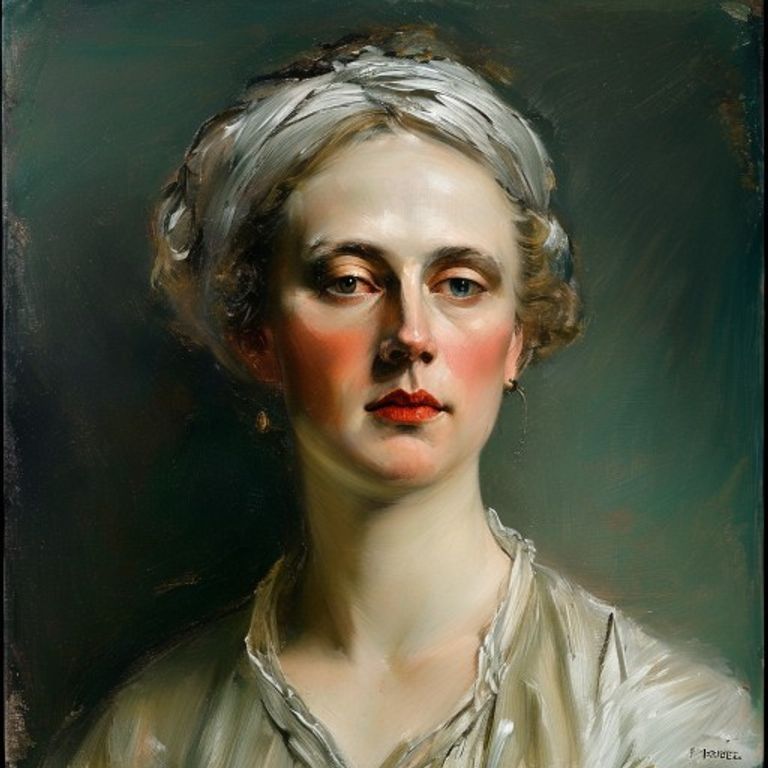
The prompt
Re-render this image as a John Singer Sargent oil portrait from the Belle Epoque, between 1884 and 1907. Wet-into-wet bravura brushwork, the painter resolving entire passages in a single confident stroke, no overworking, no fussing. Skin painted in three values: a cool grey-violet half-tone, a warm white highlight at the temple and bridge of the nose, a soft pink-vermilion accent at the lip and inner ear. Satin and silk rendered as long curving strokes of pure lead white with a touch of black for the fold, the brush direction following the form, fabric reading correctly from six feet away and dissolving into pure paint from six inches. Background a tonal grey-green or warm umber atmospheric wash, completely flat, the figure standing forward of nothing. Palette: lead white, ivory black, vermilion, viridian, yellow ochre, raw umber, a single touch of cobalt in the deepest shadow. Edges sharp on the lit side of the face, vanishing on the shadow side, the entire portrait built on the lost-and-found edge. Aristocratic ease in the pose, the sitter looking past the painter with the slight boredom of someone who has paid for their own myth. No on-canvas text, no signature visible, no frame, no watermark. Preserve the subject, pose, and composition of the source image exactly, change only the medium and rendering.
What it is doing
Sargent painted the people who paid for the painting, and he painted them as they wished to be seen, but he painted them so well that the wish itself becomes the document. Madame X's bare shoulder ruined her in Paris and made her immortal. The Sargent register applied to a contemporary face is the assertion that surface IS substance when handled at this level of skill, the Sontagian refusal of the moralizing depth-reading.
Ways to change it
Pick any of these in the gallery and the choice is added to the prompt you copy.
- Finish dial: 1890s Boston commission high finish vs late watercolor-loose oil sketch (signature) vs Madame X precision
- Background: flat umber wash (signature) vs interior with implied architecture vs outdoor en plein air
- Costume rendering: satin and pearl emphasis vs dark wool and white linen vs riding habit / sporting
- Sitter expression: heavy-lidded eyes gazing past the painter, mouth relaxed, chin slightly lifted (signature) vs eyes locked on the viewer, level brows, lips closed, unsmiling vs lips just parted, brows raised, face animated as if mid-sentence
- Edge work: sharp on the lit side, dissolving into background on the shadow side (signature) vs crisp hard outlines everywhere, every contour fully resolved like academic salon painting vs soft and blurred all around, the figure melting into the background haze
- Era: 1880s Paris vs 1890s London vs 1900s Boston Brahmin
Style lineage
Learn the visual culture this draws from: American society portraitist (1856–1925).
Related prompts
See all 20 prompts in the Fine-Art grammar