Comic-Book / Style prompt
Bande Dessinée Franco-Belgian Ligne Clair
Re-render as a European ligne claire comic: clean open line, flat color, no internal rendering, European design sensibility. Hergé, Moebius, and clean French science-fiction album styles all possible.
Customize this prompt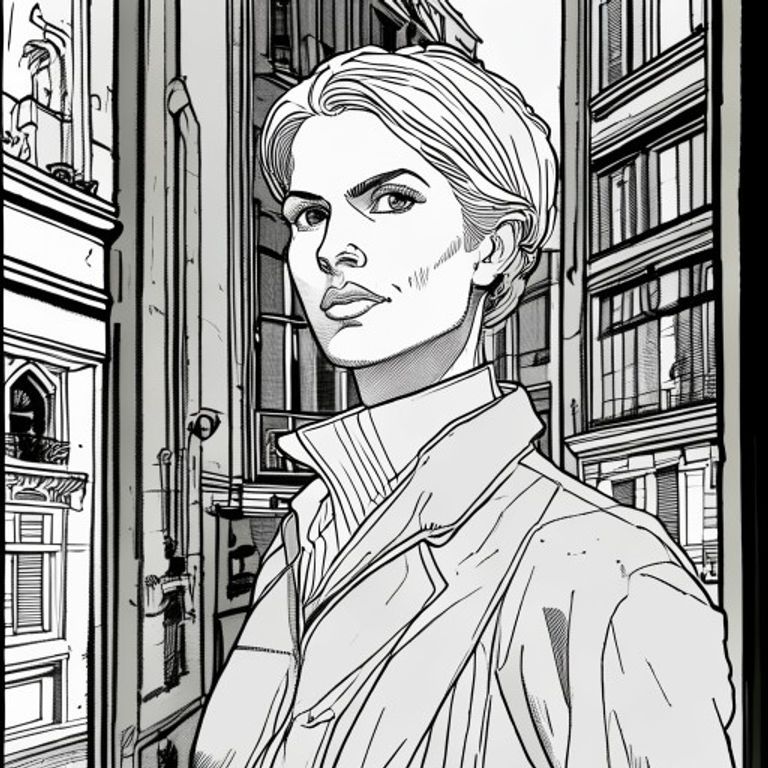
The prompt
Re-render this image as a comic book panel in the Franco-Belgian Bande Dessinée tradition, rendered in the "ligne claire" (clear line) style pioneered by Hergé and refined by Moebius, Jean-Claude Forest, and others. Linework: thin uniform single-weight line defining all contours and interior detail, the line itself is the drawing tool and the aesthetic statement, no line-weight variation with form (unlike American comics), no cross-hatching, no stippling, no internal modeling through hatching or shadow. Instead, form is suggested through the contour line alone, and the interior of shapes is either white or filled with flat color. Detail is highly selective: a window is four lines, a person's clothes are three contour lines, interior detail only where essential to reading. The line is clean and precise and often elegant, the line itself has calligraphic quality suggesting precision and control. Figure construction: European cartoonist sensibility, proportions often slightly stylized and consistent (not realistically anatomical as American superhero comics), faces simple and expressive through feature-placement rather than rendering. Color: flat fill within contour lines, no gradients, no airbrushing, colors often clear and bright, often with moderate saturation, limited palette (typically five to eight colors per panel), the color fills serving as additional information alongside the line. Setting: European architectural specificity or landscape, often rendered with the same selective precision as figures (a Parisian street corner, a Swiss village, a Mediterranean coast, a museum interior, a castle balcony), the setting as a character. Composition: often grid-based panel layout, the subject positioned with compositional balance and design precision, not dynamic action-pose but thoughtful placement. Mood: intellectual and elegant, precision as an aesthetic principle, the line as the artist's handwriting, the form as spare and elegant, often sophisticated or whimsical but never bombastic. Forbid: any sound effect text on canvas, heavy black masses, any airbrushed gradients, any American-superhero dynamic poses, no watermark. Preserve the subject, pose, and composition of the source image exactly, change only the medium and rendering.
What it is doing
Ligne claire is the European refusal of American superhero bombast. The clean line asserts that precision and elegance are more powerful than power-fantasy. The flat color and minimal modeling insist that the contour line itself can carry all necessary information. Applied to any subject, the register asserts that European design sensibility (precision, economy, intellectual rigor) produces a more durable aesthetic than American spectacle.
Ways to change it
Pick any of these in the gallery and the choice is added to the prompt you copy.
- Line-sensibility dial: pure Hergé clean precision vs Moebius fluid elegance vs Jean-Claude Forest sensual vs contemporary ligne claire refinement
- Setting-type dial: European architectural city vs landscape with topographic detail vs interior design space vs abstract geometric environment
- Color-saturation dial: bright clear primaries vs moderate mid-tone palette vs muted restrained tones vs tinted monochrome
- Detail-economy dial: extreme minimalism, contour line only vs selective essential detail vs moderate detail, more rendered than pure ligne claire
- Composition-style dial: grid panel balance vs classical center-weighted vs dynamic diagonal offset
Style lineage
Learn the visual culture this draws from: Paul Gravett.
Related prompts
See all 16 prompts in the Comic-Book grammar