Comic-Book / Style prompt
EC Comics 1950s Horror Painterly
Re-render as a Tales-from-the-Crypt splash: pre-Comics-Code rendered ink, four-color newsprint, Ingels-style sweaty corruption, Davis-style snarling teeth.
Customize this prompt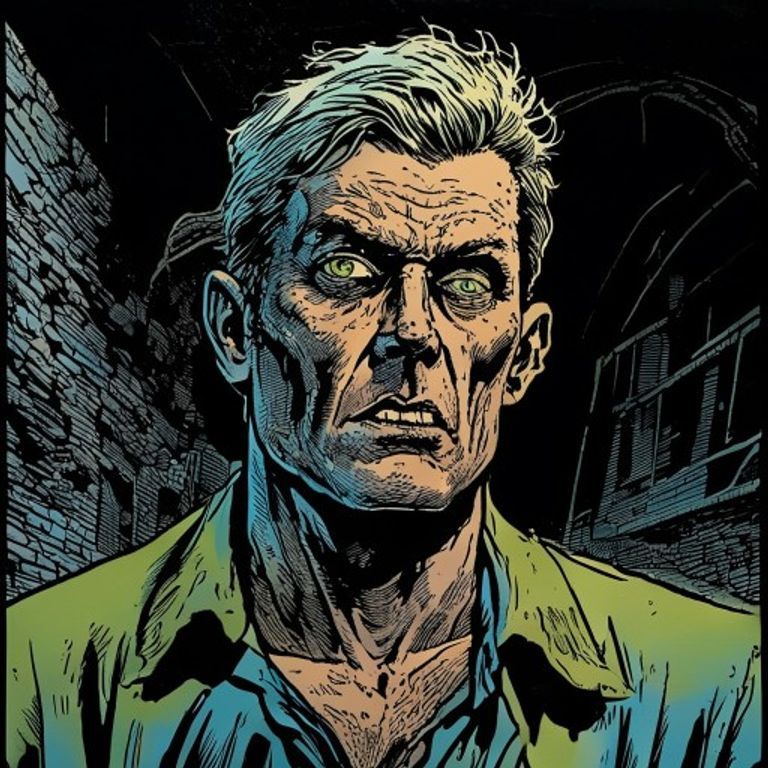
The prompt
Re-render this image as a comic book panel in the manner of EC Comics' pre-Comics-Code horror titles (1950-1954, "Tales from the Crypt," "The Vault of Horror," "The Haunt of Fear"), executed in the rendered-ink style of Graham "Ghastly" Ingels (sweaty, decaying, rotting textures), Jack Davis (snarling-teeth caricature energy), Reed Crandall (classical figure work), or Johnny Craig (clean noir staging), printed in the four-color newsprint process of mid-century American comics. Linework: brush-and-pen ink with full rendering inside contour, dense cross-hatch and stipple in shadow areas, line weight varying with form, deep blacks in recess areas, every wrinkle, sweat-drop, drool-string, fabric tear, and corroded surface rendered with descriptive detail. Color: classic four-color newsprint separation (pure cyan, magenta, yellow, black with limited overlay tints producing a fixed palette of about sixteen mixed colors), printed on absorbent newsprint paper so the colors slightly bleed and shift register imperfectly (an offset-printing misregistration shift of one or two pixels acceptable for authenticity). Setting: gothic horror staples (crypt with crumbling stone, attic with cobweb-draped trunk, swamp at night with cypress silhouettes, morgue with sheet-covered tables, suburban kitchen with horror revealed in the refrigerator, basement laboratory with arcane apparatus). Composition: high-impact splash framing, low-angle or distorted-perspective shot, often with one corner of the panel containing the Crypt-Keeper-style host's face or hand framing the action. Subject typically caught at maximum horror reveal moment, expression of dawning realization or active terror, body language betraying recoil or frozen shock. Mood: pulpy, gleeful, morally severe (EC stories were parables of greed/lust/revenge punished), pre-Code unflinching. Forbid: any speech bubble or caption or sound effect text on canvas, any modern digital coloring (must look like newsprint), any photoreal smoothness, any watermark or signature in image. Preserve the subject, pose, and composition of the source image exactly, change only the medium and rendering.
What it is doing
EC Comics in the early 1950s was an artistic peak that was destroyed by the Comics Code Authority in 1954. The argument: pre-Code horror comics were doing what later "literary" horror would be praised for, and the moral severity of the EC parable structure (greed punished, hubris punished, the venal exposed) was more serious than the prestige fiction of the same era. Re-rendering in this register revives a form that was prematurely killed.
Ways to change it
Pick any of these in the gallery and the choice is added to the prompt you copy.
- Artist dial: Graham Ingels sweaty decay vs Jack Davis snarling caricature vs Reed Crandall classical vs Johnny Craig noir-clean
- Setting dial: crypt with stone vs swamp night cypress vs morgue with sheets vs suburban kitchen horror reveal
- Print-shift dial: clean perfect registration vs slight one-pixel cyan-shift vs aggressive two-pixel mis-registration newsprint authenticity
- Horror moment: subject's eyes widening as a shadowy shape looms behind them vs subject screaming, mouth wide, sweat flying, monster lunging in full view vs subject frozen and pale, staring at gore-spattered wreckage after the attack
Style lineage
Learn the visual culture this draws from: Cartoon Art Museum.
Related prompts
See all 16 prompts in the Comic-Book grammar