Grasset Botanical Pochoir Plate (Style-Only, Image-Conditioned)
Style register: Eugene Grasset's late-nineteenth-century ornamental plant studies, stencil-cut color, measured botanical silhouettes, and teachable decorative rhythm.
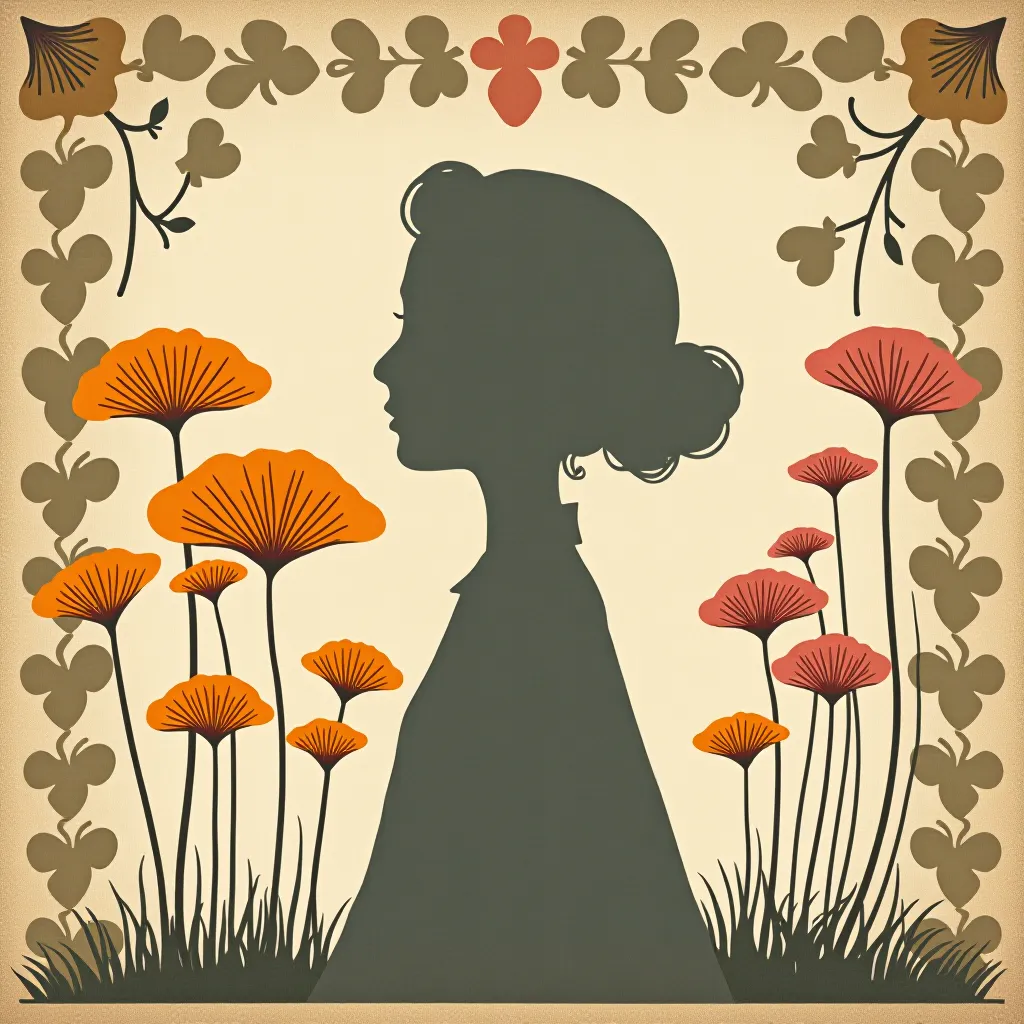
The prompt
Re-render this image as a botanical pochoir plate in the ornamental design register of Eugene Grasset, circa 1896 to 1905. Draw the source subject first in slender graphite-gray contours; then lay opaque gouache color through individually cut stencils, leaving slightly uneven pigment at each stencil edge. Simplify broad surfaces into flat planes of olive, indigo, ocher, dusty rose, and warm ivory. Surround the existing silhouette with a spare border of repeating ginkgo leaves and upright stems, arranged like a visual grammar with measured intervals rather than a wild garden. Echo one curve from the source in each leaf, so the border feels designed for this image rather than pasted on. Preserve the original perspective and the spacing among major forms. Slight stencil misalignment should show a hairline of bare paper in a few places; do not blur the subject or flood it with pattern. Suggest a plate printed on absorbent drawing stock, with pigment catching where the fibers rise. Keep large shapes bold enough to survive a small square preview. The result should feel instructional and sensuous at once, like a pattern study becoming a finished picture. Leave a calm, uncluttered band of negative space along the top or bottom edge where a title could sit. Strictly no on-canvas text, no legible lettering, no signature, no watermark, no logos. Preserve the subject, pose, and composition of the source image exactly, change only the medium and rendering. Aspect ratio matches source.
What it is doing
Grasset treated plants as a systematic language rather than a storehouse of pretty details. Repeat a stem with discipline and an individual picture becomes something others can learn to build, not merely admire.
Tuning knobs
- Stencil edge: `pigment feathering on paper` (signature) vs `hard gouache edge` vs `slight misregistration`
- Border: `ginkgo intervals` (signature) vs `iris fans` vs `upright reed geometry`
- Palette: `olive indigo ocher` (signature) vs `sage plum cream` vs `rust teal ivory`
- Pattern density: `one repeating perimeter` (signature) vs `two sparse corners` vs `full narrow border`
Related prompts
See all 10 prompts in the Art-Nouveau grammar · Open in the gallery
Get the free sample. The intro plus the first three chapters of The Liberation Engine, delivered as a PDF. The full book and the complete 606-prompt method are the paid edition.