Lempicka Cubist Glamour Portrait (Style-Only, Image-Conditioned)
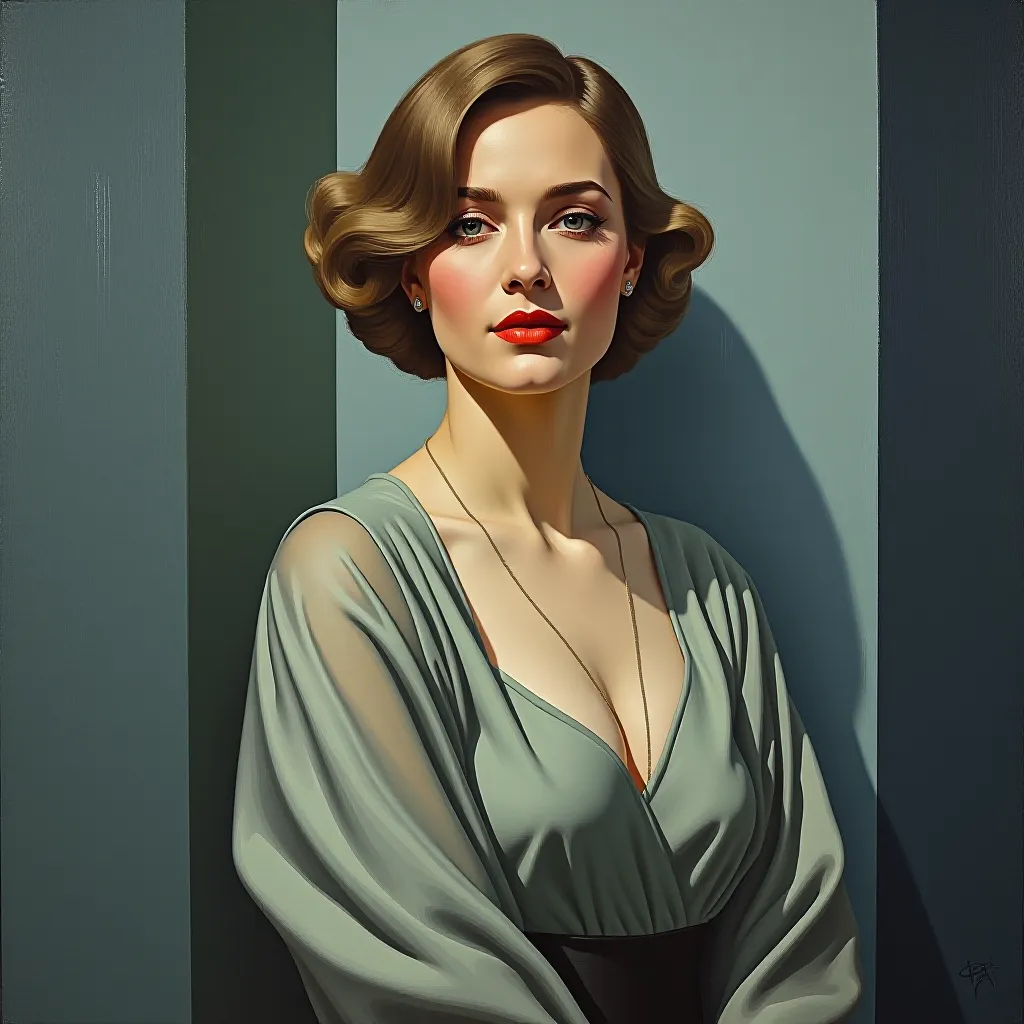
Style register: Tamara de Lempicka's 1920s oil portraits, sculpted planes of skin, folded satin, and cool urban light made geometrically self-possessed.
The prompt
Re-render this image as a late-1920s oil painting in the portrait register of Tamara de Lempicka. Keep the source identity, pose, facial expression if present, and composition exactly as given, without inventing a new sitter or garment. Sculpt existing forms into broad overlapping planes like softly beveled stone: one cool gray-green plane beside a warm flesh or cream plane, each with a deliberate change in light. Paint using smooth layered oil glazes over a firm underdrawing; leave subtle bristle traces where the darker planes meet and a restrained varnish reflection over the lightest areas. Where the source contains fabric, give its existing folds the dense pearly folds of satin; where there is no fabric, keep the same disciplined angular modeling on the actual material present. Set the background in simplified smoky blue and slate verticals rather than detailed scenery or a stage. Hold highlights with a narrow palette of ivory, jade, umber, and soft coral; reserve deepest black for a few confident cuts. Let the original expression remain human beneath the almost architectural modeling. This is assured, cool, and subtly vulnerable, neither a magazine cover nor a film premiere advertisement. Make a few large planes carry the whole reading at small scale. Leave a calm, uncluttered band of negative space along the top or bottom edge where a title could sit. Strictly no on-canvas text, no legible lettering, no signature, no watermark, no logos. Preserve the subject, pose, and composition of the source image exactly, change only the medium and rendering. Aspect ratio matches source.
What it is doing
The portrait's apparently invulnerable sitter is assembled from exposed transitions between hard planes and soft skin. Lempicka's glamour is not a blur concealing structure: it is the deliberate construction of a self that can withstand being looked at.
Tuning knobs
- Plane size: `few broad bevels` (signature) vs `smaller faceted planes` vs `gentle rounded planes`
- Skin light: `cool beside warm` (signature) vs `mostly cool` vs `mostly warm`
- Oil surface: `smooth glaze with bristle joins` (signature) vs `dry matte paint` vs `glossy varnish`
- Background: `smoky blue verticals` (signature) vs `muted olive blocks` vs `plain slate field`
Related prompts
See all 10 prompts in the Art-Deco grammar · Open in the gallery
Get the free sample. The intro plus the first three chapters of The Liberation Engine, delivered as a PDF. The full book and the complete 606-prompt method are the paid edition.