Album-Cover / Style prompt
Coil Occult Avant-Garde Esoteric (John Balance / Peter Christopherson Register)
Style register: Coil 1980s through 1990s album sleeve aesthetic, John Balance and Peter Christopherson's occult-esoteric visual language, hand-drawn grimoire imagery, theological collage, beauty withheld in favor of unflinching truth.
Customize this prompt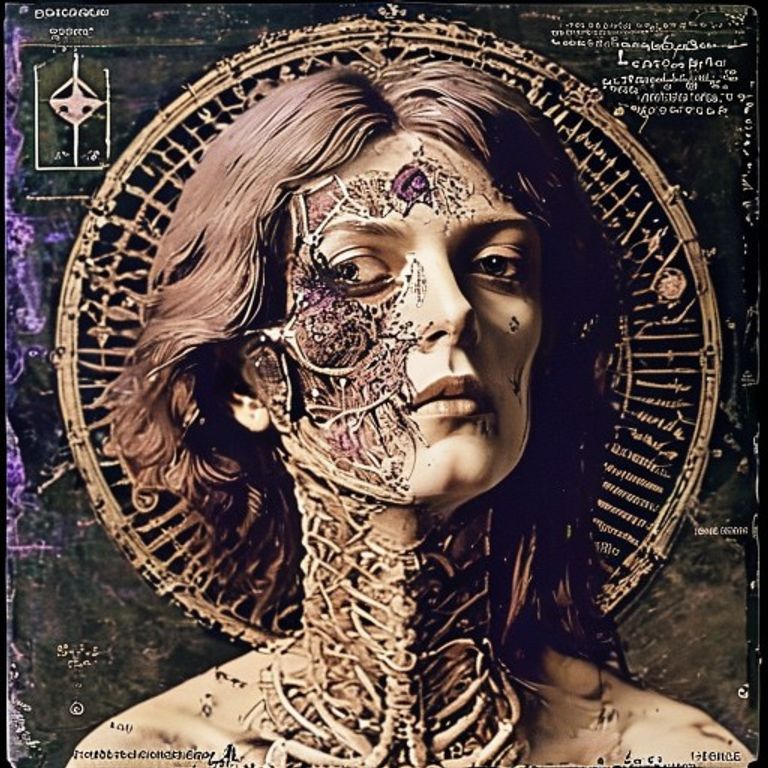
The prompt
Render the source image as a Coil album sleeve from the 1980s through early 1990s, in the visual register of Coil Love's Secret Domain, The Snow EP, Musick to Play in the Dark, and Queens of the Stone Age collaborative era, channeling John Balance and Peter Christopherson's occult-esoteric hand-drawn aesthetic. Source integrated into a dense visual field of: hand-drawn alchemical symbols, anatomical studies rendered in sepia ink, occult text fragments (illegible, just the mass of language as visual texture), watercolor washes of sickly violet, bilious green, medicinal brown, cadaver-grey, oxidized copper. Grimoire aesthetic dominance: the cover reads as a page from a forbidden manuscript, not a record cover pretending to be art. Subject either transformed into an anatomical form (viscera, bone, cellular structure rendered with unflinching detail) or positioned within a theological collage of religious iconography distorted through occult reinterpretation. NO beauty applied. The surface should be uncomfortable, deliberately ugly, the kind of image that rewards close looking but punishes casual viewing. Texture: ink on paper with visible watercolor blooms, sepia staining, hand-written notes in margins (illegible), the evidence of manual occult labor. Mood: grimoire-like, esoteric, wound-as-the-only-door, uncompromising, hostile to pleasure. Typography: band name rendered as part of the occult text mass, indistinguishable from the symbols, not a logo. Square 12-inch LP-jacket aspect ratio. Preserve the subject, pose, and composition of the source image exactly, change only the medium and rendering.
What it is doing
Coil rejected the record sleeve as a consumer product gateway and claimed it as a mystical object. John Balance believed that withheld beauty was the only honest response to a world that promises pleasure in exchange for forgetting what you are. The hand-drawn grimoire aesthetic was not nostalgia, it was refusal. Every anatomical detail, every occult symbol, every deliberately ugly color choice said: you must work to see this, and if you do, you will not enjoy it. That labor is the point.
Ways to change it
Pick any of these in the gallery and the choice is added to the prompt you copy.
- Anatomical vs symbolic dominance: subject rendered as cellular/visceral form vs integrated into theological symbol-field vs hybrid alchemical diagram
- Color palette: monochromatic sepia (austere) vs bilious-washed (medicinal horror) vs copper-oxidized (ancient)
- Illegible text density: sparse margins (breathing room) to total occultation (text as ground)
- Hand-drawn evidence: clean technical drawing vs visible hesitation and correction marks vs watercolor bloom unpredictability
- Grimoire page register: medieval manuscript (vellum aesthetic) vs modern occult (19th century spiritualism) vs contemporary (deliberately anachronistic collage)
Style lineage
Learn the visual culture this draws from: NachtKabarett.
Related prompts
See all 28 prompts in the Album-Cover grammar