Album-Cover / Style prompt
Italian Futurist Sleeve (Depero / Balla Register)
Source-image processed through 1916-1922 Italian Futurist publishing: dynamic force-lines, fragmented motion, mechanized typography sensibility (without legible text), oranges and reds and prussian blues.
Customize this prompt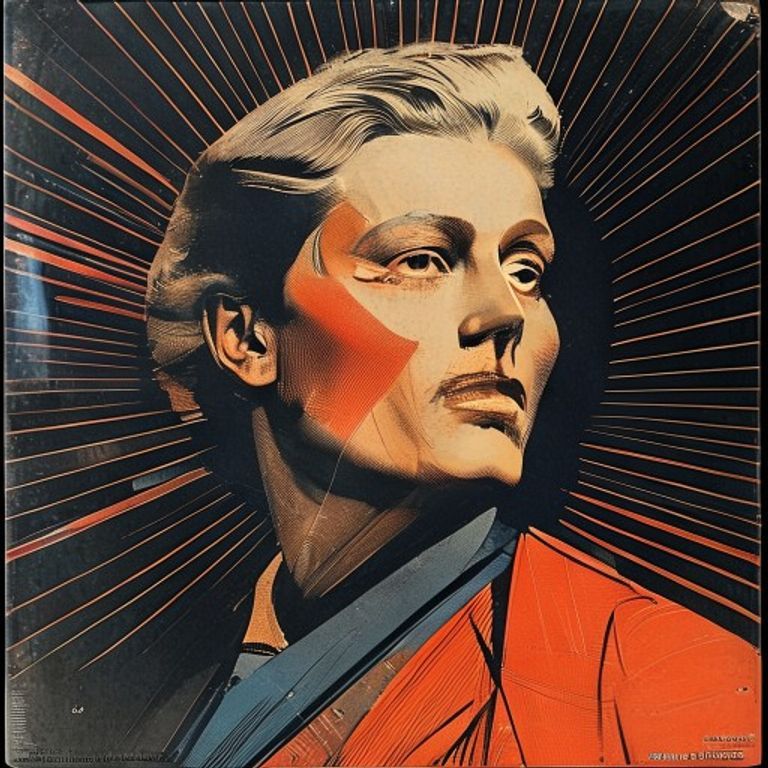
The prompt
Render the source image in the visual register of a 1916-1922 Italian Futurist publication or sleeve in the Fortunato Depero, Giacomo Balla, and Umberto Boccioni lineage. Palette built on burnt orange, vermillion, prussian blue, lead white, and charcoal black. Apply visible dynamic force-lines radiating from the subject, fragmenting the silhouette into overlapping facets that suggest motion arrested mid-frame. Mechanical hatching and rotational geometry built into background space. Subject feels propelled rather than posed, even at rest. Square 12-inch LP-jacket framing where source aspect allows. Mood: kinetic, aggressive, machine-worshipping, modernist, slightly menacing. Heavy ink registration, paper-stock texture, slight off-register printing as if pulled from a hand-operated press. No legible text, no band name, no logos, no catalog marks. Preserve the subject, pose, and composition of the source image exactly, change only the medium and rendering.
What it is doing
Futurism worshipped speed because speed was the body of the machine, and the machine was the body of the new century. The sleeve in this register does not depict a musician, it depicts a vector. When the audience puts on the record, they are meant to feel themselves accelerated. The buried discomfort is that Futurism's aesthetic vocabulary fed directly into Italian fascist iconography by the late 1920s. Borrowing the register without the political tail requires deliberate restraint at the formal level (Depero-era playfulness, not Boccioni-era militancy).
Ways to change it
Pick any of these in the gallery and the choice is added to the prompt you copy.
- Force-line density: light (single radial set) to heavy (full multidirectional)
- Faceting depth: subtle (one ghost layer) to aggressive (cubist-adjacent fragmentation)
- Palette warmth: warm (Depero) or cool (Severini)
- Mechanical hatching: light pencil to heavy lithographic crosshatch
- Press registration: clean (modern) or deliberately misregistered (period authentic)
Related prompts
See all 28 prompts in the Album-Cover grammar